
The List Things

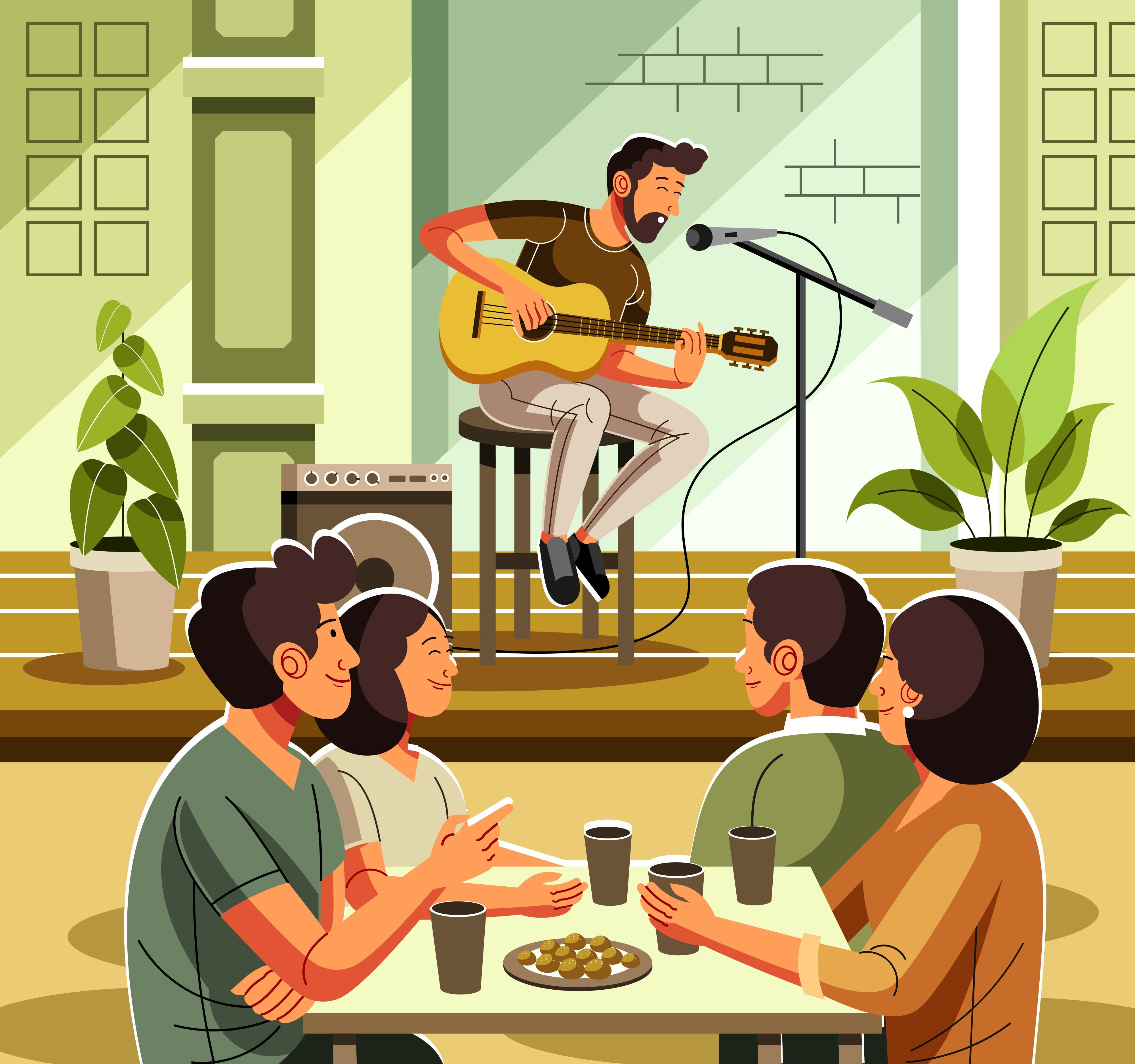
I have vivid recollection of an evening well spent by the banks of the Nile in Cairo a few years ago. I was at the helm of a small tech business at the time and a fellowship programme I was part of had gathered us in that layered, ancient city on a very modern undertaking: an ecosystem tour. After a day of visiting with businesses and attending panel discussions, interspersed with extended periods of stewing in traffic, we had retired to the outside terrace of the Kebabgy Oriental Grill where we huddled around tables, stuffed ourselves with baladi and hummus and decompressed from the day.
Time has desiccated the details of the night and left me the unadulterated essence. At our table sat a Brazilian student, an American journalist, a French entrepreneur and I. The conversation was expansive and meandering, a fitting tribute to the moment and place. At last the journalist, at least I think it was she, placed a tantalisingly simple challenge on the table: what would you be doing if you could do anything? Everyone was surprised at the speed of my response—how top of mind my answer was, how certain it came. I had a list of four things. I pulled it out, recited it to my dinner companions, promptly refolded it and stashed it back where sensible people file their wild dreams.
My list things were not out of reach things. Some of them I have always done in fits and starts along the margins of the other things that fill my life. The challenge was, and has always been, with stopping all the other sensible, rational things I was doing and focusing almost entirely on the list things. Going all in. That would be too risky. Too far, even for I who is known to have a decent appetite for risk.
Then something happened. The business that I had spent six years giving everything I had came precariously close to dying. To be clear, it was a riskier thing than most would have an appetite for, but it was not as risky as my list things and I had, for whatever reason, a non-zero amount of confidence that I, of all people, could make it work, as I had always done. Then life happened. Suddenly I was confronted with incontrovertible evidence that I am not invincible. It was a difficult chapter: my sense of self was dented and my ego was bruised. But when I was done licking my wounds, I found that everything had changed. A stumble, an almost failing, somehow set me free. It shifted the ground under my feet in an unexpected way. Anything can happen so why not let the anything that’s going to happen find you contributing where you feel most alive? If risk is universal and inescapable, if the possibility of failing is ever present in all things, then I might as well channel my energy towards what I have always wanted to do more than anything else. To my list things.
As TV Series final seasons go, I count Season 7 of The Good Doctor, a medical procedural, among the best. Solid growth for all the main characters. Resolution arcs that unfold at a brisk pace without descending into chaos or testing our capacity to suspend belief.
One arc I was particularly curious about in the final season was Dr Lim’s. What, I wondered, would they make of this older, highly competent, highly accomplished woman who was both single and childless. How would they tie up her story? Throughout the series the show writers had regularly cornered Dr Lim and forced her to reckon with her life choices. Did she choose not to have children or did the chips just land that way? Why was she single? What would she do differently if she could? Whether the show writers had planned it or stumbled upon it, this is a fairly accurate depiction of what older, single, childless women disproportionately face: the constant pressure to justify their choices and show their workings.
Enter Season 7 Episode 9. Dr Lim treats a construction worker who has been struck by lightning. Clint is his name. Turns out construction worker wasn’t what Clint had dreamed of becoming when he was growing up. In fact, he had once been in a band, he tells Dr Lim. The band had put out a couple of EPs but they didn’t do well so he did the sensible thing and got a day job. Next thing he knew he was a foreman for a roofing company getting struck by lightning. Risk had bolted right through his safe and sensible thing.
This experience has reawakened something in him though, Clint says. He’s alive and he will not take it for granted. He has decided to recommit to his music. What does it matter if he has to eke out a living playing clubs and bars, he declares, as long as he can look in the mirror and know he’s the person he wants to be.
Clint is, of course, a perfect foil for Dr Lim: a dramatic device inserted into her character’s path to cause her to reflect on her own life. We, as the audience, are supposed to wonder whether, when Dr Lim looks in the mirror, she knows she is the person she wants to be. This is the question that hangs in the air after Clint’s epiphanic declaration.
Then Clint suffers a seizure and the doctors discover he has a tumour in his frontal lobe. If left alone, it could progress and kill him. They have to remove it and, in order to get it all out, they have to cut quite aggressively, which means that after the surgery, Clint might not be able to play the guitar.
Clint is sad, obviously, but what can he do? Alive is alive, he says. He’ll have the surgery.
Next we catch a forlorn Dr Lim looking wistfully at a photo she keeps in her office. She’s the badass bike riding Dr Lim from seasons gone by, posing in stylish sunglasses and a leather jacket on her Ducati. The scene then transitions to her consulting Dr Glassman, the resident expert on all things brain surgery, on how to operate on Clint in a way that enables him to keep playing the guitar. Because, she explains to Dr Glassman, he was struck by lightning and remembered he was a guitarist and she doesn’t want to take that away from him.
Glassman tells Dr Lim that what she wants to do, that is, remove Clint’s tumour while preserving his ability to play, is a big swing. Then he adds that she looks amped up about it and that it suits her. He loves her energy.
Is this the show’s subtle way of signalling that she’s remembering who she is too?
The surgery is successful. Dr Lim removes Clint’s tumour while protecting his ability to play the guitar. She’s protected his ability to look in the mirror and know that he is the person he wants to be. She is that surgeon.
Maybe, we in the audience are left mulling, the point is remembering who we are and why we are where we are. For Clint, remembering meant taking a chance on his guitar again. For Dr Lim, it meant remembering why she became a surgeon in the first place. For me, it meant pulling out the list.
There’s a reason we choose our version of construction worker over playing in the band and it’s not that we’re lazy, stupid or cowardly. Often it’s because it is the reasonable thing to do.
The fringe things are fringe for a reason. They’re harder, riskier or both. Or they are completely dissonant with the capitalist logic within which we make a life. It would be foolhardy to pretend otherwise. This is why it serves no useful purpose to beat ourselves up over what we have not done or what we ought to be doing. This world, with all its distortions and imperfections, is the one we have for now and it is the one we get to live and strive in. We ought, on this account, to be gentle with ourselves and show ourselves grace. But we also owe ourselves the permission to dream a little. To stretch our imaginations about what it is possible to do and be and what is worth doing. We, and the world, deserve it.
Failure is baked into the very fact of attempting anything. As soon as we get up and apply ourselves to doing something, we could fail. Sometimes the risk is low, sometimes the risk is high, but there’s always a risk.
Coming fully into that understanding after the thing that happened has helped to temper my ego. I hate to fail but I well might. The harder the things I try the higher the risk of failure. It’s still well worth it to do the hard things. I had much rather fail than not try.
Henceforth I am resolved that my orientation toward the prospect of failure will be to ask myself who I become, even if I fail. I want to spend my life on the list things, and to do them creatively, courageously, with excellence and integrity.
Viola Davis said something during her recent acceptance speech at the NAACP awards: The definition of hell, she said, is on your last day on earth the person you became meets the person you could have become.
I must be in an uncommonly optimistic phase of my life right now because what her words made me wonder was what if the best happens? What if heaven happens instead? What if the person you are turns out to be a much better version of the person you could have become and you get to heave a sigh of relief and declare triumphantly: there but by God’s grace go I? What would that look like and how could you make it so?
If we fling our wildest dreams into the universe like an unhinged prayer, wrap our hopes in words, dare speak them, let them flutter out of our bosom and into the world, inscribed with our name, do they in turn reel us out of our comfort zones and into the terrifying prospect of becoming and being what we have hitherto only dared to dream?
I keep close to heart the counsel the American journalist from Cairo offered me at our next and last encounter: do not be afraid to be ambitious, she said.
Asking what you would be doing if you could do anything is a great place to start.